Property owners login seperatorBookmark Spain-holiday.com seperator
Ferieboliger i Spanien vakantiehuis spanje Ferienwohnung Spanien Affitti vacanze in Spagna Semesterbostäder i Spanien Feriehus i Spania Casas en alquiler en España Locations de vacances en Espagne Casas de férias em Espanha
Spain Holiday
Beautiful holiday homes
Home>>Sevilla tourist and travel information

Sevilla tourist information

Tourist and travel info about Sevilla!

Holiday rentals on Sevilla Holiday Villas, cottages, apartments and rural homes for rent in Sevilla

p_441_sevilla_sierra_norte.jpg
p_442_sevilla_doñana.jpg


Sevilla Province

Relatively few foreign tourists venture beyond the delights of Seville city and the regions main transport arteries linking Seville with the neighbouring provinces of Cordoba, Cadiz, Malaga or Huelva. But there are still many more places to explore. You can do this on foot, through some of the Sierra Morenas most stunning countryside thickly clad with oak trees, or marvel at the regions imposing religious architecture or sample some of the provinces finest gastronomic treats such as cured sausages and aniseed liquor.

Much of the provinces landscape is dominated by the mighty Río Guadalquivir, one of Spains most important rivers. Seville itself is set in the heart of the fertile river valley, while many of the provinces most significant settlements are scattered around the gently rolling Guadalquivir river plain (vega), known as La Campiña, planted with patchwork fields of wheat and olive groves. Historically, this area was largely in the hands of a few wealthy landowners and today the land is still divided up into huge farm estates, punctuated by large towns rather than small villages.

Farmland to the EAST

Heading east of the city is a vast, undulating countryside of cereal fields and olive trees interspersed with a series of towns - Carmona, Écija, Estepa and Osuna - boasting some of the provinces finest architecture outside of Seville, including distinguished Baroque townhouses and handsome Mudéjar churches

CARMONA:

Located on a low hill overlooking a fertile plain, Carmona is a picturesque, small town with a magnificent 15th century tower built in imitation of Sevilles Giralda. This is the first thing you see and sets an appropriate tone for the place. Not surprisingly, given its proximity, Carmona shares a similar history to Seville, and was an important Roman city which, under the Moors was often governed by a brother of the Sevillan ruler. Later Pedro the Cruel built a palace within its castle which he used as his royal residence in the country.

At the entrance to the town is the Puerto de Sevilla a grand if ruinous fortified gateway which leads to the historic old part of the city. Within the wall, narrow streets meander past Mudejar churches and Renaissance mansions. Up still further is the Plaza San Fernando which is comparatively small but dominated by splendid Moorish style buildings, behind here is a bustling fruit and vegetable market which, like all markets in Andalucia, appropriately reflects what is in season at any given time.

Close by to the east is Santa Maria, a stately Gothic church built over the former main mosque, whose elegant patio is retained. Like many of Carmonas churches, it is topped by an evocative Mudejar tower and part of the original minaret may still be spotted. Dominating the ridge of the town are the massive ruins of Pedros palace, destroyed by an earthquake in 1504 and now taken over by a gracious if expensive parador. To the left the town comes to an abrupt halt at the Roman Puerta de Córdoba from where the original Cordoba road drops down to a vast plain.

The Roman necropolis is particular noteworthy. It lies on a low hill at the opposite end of Carmona amid cypress trees and contains more than nine hundred family tombs dating from the second century BC to the fourth century AD. Enclosed in subterranean chambers hewn from the rock, the tombs are often frescoed and contain a series of niches in which many of the funeral urns remain intact. Some of the larger tombs have vestibules with stone benches for funeral banquets and several retain carved family emblems. Opposite is a partly excavated ampitheatre. Carmona is a fascinating town and well worth a visit, whether you are a history buff or not ..

From Carmona is a 28km-long greenway to Alcalá de Guadaíra, the Vía Verde of the Hills, which you can go on foot, bike or horseback.

ESTEPA:

This small town 24km east of Osuna is famous for two very different reasons. Chiefly it is renowned for the biscuits known as polvorones and mantecados which it bakers make each Christmas and which are eaten across this region of Andalucía.

Its other claim to fame is a grisly mass suicide 2,200 years ago, when in 208 BCE Roman invaders found that the entire population of what was then a small but important outpost of Carthage had torched their homes and killed themselves rather than be overrun by the Romans.

The Romans re-populated the town from their settlements elsewhere in the region and called it Ostipo, although they themselves were ejected by Visigoths from the Baltic regions four centuries later. In the eighth century, the Moorish armies who had invaded the south-western tip of the region in 711 CE took the town and renamed it Istabba. The Arabs renovated an abandoned pre-Roman castle at the top of the San Cristobal hill on which the town sits, and began fortifying it against the incursions during the Reconquest. Shifts in power between various caliphates saw it fall under the control of various caliphs, including the kingdoms of both Granada and Sevilla. The renowned poet Al Zawwali lived here before returning to Marrakech in 1220 shortly before his death.

Estepa, as it would be rechristened, was taken quite early in the Reconquest, by King Fernando III, The Saint, in 1241, but was the subject of regular attacks from Granada, which would not fall to the Christians until 1492.
Life in the town stabilised following the Conquest, and like its larger neighbour Osuna, which it resembles in part, Estepa settled into comfortable wealth in this prime agricultural region of Andalucía, a wealth made apparent by the number of fine mansions in the town centre. As the town expanded, downhill from the castle, it effectively departed the protective bailey, leaving the San Cristobal hill and fortifications abandoned.

Like westerly Olvera, Estepas fortunes took an unexpected turn in the early 19th century, when the consequences of successive wars and economic downturn transformed Estepa into a haven for the bandoleros, or bandits, who haunted the mountains and often made outrageous forays into the towns and villages. Most notorious was José Maria Hinojosa Cabacho, El Tempranillo, who once issued what was in effect a press statement saying that while the King may well rule Spain, he, Tempranillo, ruled the mountains. Infamous names such as Juan Caballero, El Vivillo and El Pernales were also regular visitors. The bandoleros were dealt with in brutal reprisals.

In 1886, queen Maria Cristina honoured the town with the title of City by Royal Disposition, a sign of its status in the region.

Wooded hills to the NORTH

If you need some rural relief, head 90km north of Seville for the wooded hills of the Sierra Norte Natural Park.

This gently rolling section of the immense Sierra Morena has some delightful mountain towns and villages to explore, many with a ruined hilltop castle, elegant churches and welcoming bars. It is superb walking and cycling country with lots of waymarked trails.

SIERRA NORTE NATURAL PARK:

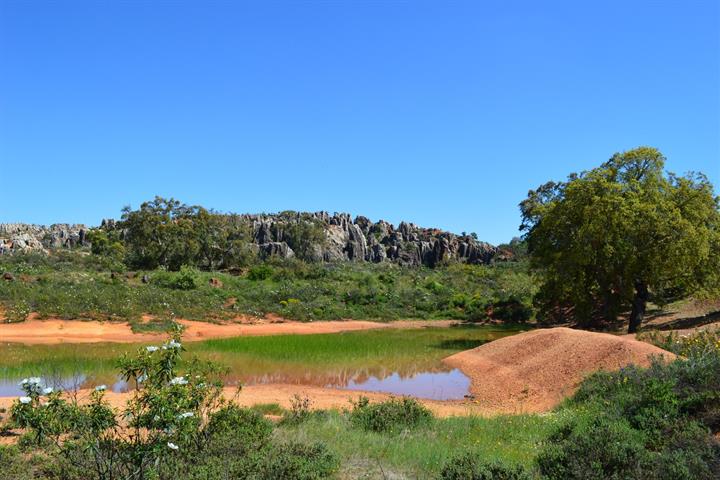
The central section of the immense Sierra Morena is made up of the extensive and sparsely populated Sierra Norte Natural Park, a landscape of gently rolling hills clad in dense evergreen oaks. Its similar to the adjacent natural parks of the Sierra de Aracena y Picos de Aroche and Hornachuelos, in the provinces of Huelva and Cordoba respectively. Few foreign tourists make it up here, although its popular with Sevillanos who travel the 90km north from the city at weekends and holidays. It is one of Andalucias largest protected areas, covering 177, 484ha.

Villages and towns are few, but pretty, with a distinctively Moorish feel about their steep, cobbled streets that often lead up to a hilltop castle or Mudéjar church.

The village names indicate the regions mining history, like Villanueva del Río y Las Minas just south of the park where the mines (minas) consisted of a large coalfield. In Almadén de la Plata the Romans extracted silver (plata) and in the Cerro del Hierro there was an iron (hierro) mine.

Information
Visit the tourist office in Seville on Avenida de la Constitución, 954 210 005, or the parks main visitors centre, El Robledo, at Km 1 on the A452 between Constantina and El Pedroso, 955 881 597. The centre has an exhibition on the park and can provide maps and details of walks and activities, like horse riding, trout fishing, bike hire and watersports, such as canoeing on El Pintado reservoir.

The centre is open Friday to Sunday and public holidays 10am-2pm, plus an afternoon opening, whose time varies depending on the time of year: from April to September its open 6pm-8pm and from October to March its open 4pm-6pm. It is also open Wednesday and Thursday from April to mid-June and mid-October to mid-January, at the same times as other days.

In the grounds of the visitors centre is a botanical garden, which has many of the plant species found in the park.

The second visitors centre is on the western edge of the park, near Almadén de la Plata, at Cortijo Berrocal, Finca Las Navas in Berrocal, on the C443 at Km 14, 955 952 049. There is also a picnic area, restaurant and the starting point of three walks.

Access
The park is in the north of Seville province and is easy to access. Within the park there is a network of minor roads, dirt tracks and footpaths, giving access by car and/or on foot.

Its worth travelling by train from Santa Justa station in Seville to enjoy the journey up to and through the Sierra Norte. The train stops at El Pedroso, Cazalla de la Sierra, Constantina and Guadalcanal

Marshland to the SOUTH

South of Seville is the Guadalquivir River Plain that flattens out into a somewhat monotonous landscape relieved by the occasional whitewashed town or village, the most interesting of these being Lebrija and Utrera.

Southeast of Seville is Alcalá de Guadaira and, close to the Cadiz provincial border, the charming hilltop village of Morón de la Frontera. Both of these retain remains of their important Moorish heritage.

The Guadalquivir river estuary has several important wetland sites, which are popular with migrating birds in spring and autumn and, in winter, flocks of wildfowl. Brazo del Este Natural Area is the most remarkable of these and features a large population of purple gallinules along with over 200 species of other birds. Near the river delta is a series of lakes in the Lebrija - Las Cabezas Natural Reserve and the Utrera Natural Reserve, both of which also attract a significant number of birds. The Guadalquivir delta forms part of the protected environs of the Doñana National Park.

DOÑANA NATIONAL PARK:

The Parque Nacional de Doñana is one of Europes most important wetland reserves and a major site for migrating birds. It is an immense area; the parque itself and surrounding parque natural or Entorno de Doñana (a protected buffer zone) amount to over 1,300 sq km in the provinces of Huelva, Sevilla and Cádiz. It is internationally for recognised for its great ecological wealth. Doñana has become a key centre in the world of conservationism.

Doñana is well known for its enormous variety of bird species, either permanent residents, winter visitors from north and central Europe or summer visitors from Africa, like its numerous types of geese and colourful colonies of flamingo. It has one of the worlds largest colonies of Spanish imperial eagles. The park as a whole comprises three distinct kinds of ecosystem: the marismas, the Mediterranean scrublands and the coastal mobile dunes with their beaches.


Red Fauna, Marismas de Odiel

The configuration of the Parque Nacional de Doñana is a result of its past as the delta of the Guadalquivir river, the big river, or Wada-I-Kebir, of the Moors. But it is a delta with a difference. Unlike most, the river has only one outlet to the sea, just below Sanlúcar de Barrameda. The rest of what used to be its delta has gradually been blocked off by a huge sandbar that stretches from the mouth of the Río Tinto, near Palos de la Frontera, to the riverbank opposite Sanlúcar, and which the sea winds have gradually formed into high dunes. Behind this natural barrier stretches the marshlands (marismas).

The effect of this extraordinary mélange of land and water was to create an environment shunned by people but ideal for wildlife. As early as the thirteenth century, the kings of Castille set aside a portion of the Doñana as a royal hunting estate; later the dukes of Medina Sidonia made it their private coto too. One of the duchesses of Medina Sidonia, Doná Ana de Silva y Mendoza, indulged her antisocial instincts by building a residence there that was more hermitage than palace. As a result, the entire region came to be known as the forest of Doná Ana, or Doñana. In the eighteenth century, Goya is known to have visited the Duchess of Alba at the Palacio de Doñana when she was its proprietress. Subsequently, the land passed through many hands before the official creation of the parque nacional in 1969.

Meanwhile, adjoining areas of wetland were being dramatically reduced. Across the Guadalquivir vast marshes were drained and converted to farmland, until only the protected lands of the Doñana remained intact. For centuries there had been only a vacant spot on the map between Lebrija in the east and Almonte in the north west, but in recent years whole towns and villages have sprung up west of the Guadalquivir, and the resort town of Matalascañas has brought urban sprawl to the south-western edge of the Doñana, a place once occupied by reed-thatched fishermens huts. The proximity of these settlements has further complicated the work of the parks wildlife guardians. Two of the Doñanas precious lynxes, for example, have been run over by cars on the highway to Matalascañas; cats and dogs straying out of the nearest towns have killed animals in the park, and birds that have overflown the fences have been gunned down by trigger-happy hunters despite stringent conservation laws.

A more permanent threat to the Doñanas ecosystem are the new ricefields and other agricultural projects north of El Rocío, whose run-off waters sluice pesticides into the marismas and the sulphur mines upstream at Aznalcóliar which was effluvium into the river.

Flora


The park supports an incredible array of vegetation in a variety of virgin habitats. Inland are large expanses of stone pines, as well as Mediterranean scrublands, with narrow leaved cistus heather, mastic tree, rosemary, cistus scrub, glasswort, red lavender, rosemary and thyme. There are also junipers and forests of cork oaks, known as "las pajareras" for the enormous quantity of birds that nest in them. Among the flowering plants are lavender, tree heaths, gladioli, irises and rock roses. In the spring the marshlands are covered with flowers.


Fauna


This is a vast wilderness that supports an unrivalled wealth of fauna; 125 species of birds are known to be resident here, as well as 125 migratory bird species, 17 reptiles, nine amphibians and eight species of fish. There is a rich variety of mammals, 28 species in total, with some in danger of extinction, such as the lynx and the Egyptian mongoose. Also here are badgers, rabbits and otters. Game is also plentiful, with red deer, fallow deer and wild boar.


Birds

Doñana comprises delta waters which flood in winter and then drop in the spring leaving rich deposits of silt and raised sandbanks and islands. These conditions are perfect in winter for geese and ducks but most exciting in spring when they draw hundreds of flocks of breeding birds. If youre lucky you may also catch a glimpse of the rare Spanish Imperial Eagle, now down to 15 breeding pairs. In the marshes and amid the cork oak forests behind youve a good chance of seeing grey herons, lanner falcons, ring and turtle doves, partridges, oxpeckers, cattle egret, storks and vultures.

What you see at Doñana depends on the time of year and the luck of the draw - November, December and January constitute the off-season for visitors but is an ideal time for waterfowl, since the autumn rains have brought life back to the marismas and filled the lagunas. Gradually, the water attains a uniform depth of 30-60 centimetres (12-24 inches) over vast areas and the resulting marches attract huge flocks of wildfowl, ducks, geese and other water birds of the most varied kind. These are freshwater marshes, incidentally, although there are traces of sea salt in the underlying silt. Here and there small islands (vetas) rise above the water. These remain dry throughout the year, creating an ideal breeding ground for waders and terns.

Towards the end of February the geese that have migrated here from northern Europe commence their return journey, but at the same time the spoonbills arrive from North Africa to nest in the cork oaks. In March the waters begin to recede and spring begins in earnest. This is also the time when the imperial eagle hatches its eggs: 15 breeding pairs of these formidable hunters were counted recently in the park - above a third of all the imperial eagles known to survive in Spain. Each pair requires nearly 2,600 hectares of land to hunt over in summer, and even more in winter. This is a far from perfect environment for these great birds and Doñana pairs seldom raise as many young as those elsewhere in Spain.

In spring the marismas are alive with birds - some settling down to breed, others en route for more northern climes. Huge numbers of kites hang in the air, harriers send the duck scurrying skywards in fear of their lives. There are black-tailed godwit and ruff on their way to Holland and beyond, greenhank and wood sandpiper bound for Scandinavia, little stint and curlew sandpiper heading for northern Siberia and usually a marsh sandpiper that should be a thousand kilometres or more further east.

Overhead, vast flocks of whiskered terns wheel and circle along with a few gullbilled terns and racy pratincoles. There are swallows galore, some of them red-rumped, and bee-eaters and rollers perch on post and wire. All of these and more can be seen from the bridge at El Rocío - perhaps the best free birdwatching in Europe.

From bird hides at the reserve centre, just south of the bridge, you will hear Cettis and Savis warblers and watch egrets, herons and little bitterns come and go. Marsh harriers and kites are continually on view and sometimes a majestic imperial eagle will soar from the woods of Doñana over El Rocío to the Coto del Rey.

In mid-summer the temperature in the parched marismas easily exceeds 40°C. Aquatic birds that remain in the stagnant pools die of botulism, and each year thousands more die during the advancing drought in the Doñana. In August, there is almost nothing left of the marshs aquatic fauna, but it is a good time for observing dozens of summer residents, which include griffon vulture, booted eagle, red and black kites, short toed eagle, Baillons crake, purple gallinule, great spotted cuckoo, Scops owl, red necked nightjar, bee eater, hoopoe, calandra, short toed and thekla larks, golden oriole, azure winged magpie. Cettis and Savis warblers, tawny pipit, great grey shrike, woodchat shrike and serin.


Rivers

As part of the Guadalquivir delta, the park is riddled with creeks and streams, the main ones being the Brazo de la Torre, the Caño de Guadiamar and Caño Real. The park is dotted with ponds (lucios) that, like the marshlands themselves, can dry up almost completely in summer.


Walks

The core of the park is off-limits to independent walkers. There are footpaths, often with bird hides, leading from the following visitors centres: El Acebuche, La Rocina and El Palacio del Acebrón. You can also walk alonside the park boundary on the Playa de Castilla, near Matalascañas. A signposted walk, the Sendero Laguna del Jaral Medano del Asperillo, is off the A494 at Km 47. Coming from Matalascañas, there is a car park on the left with an information board and map. It is a challenging circular 5.6km trail that crosses sand dunes and pine woods and will take around 3½ hours. It has superb views of the sea. Make sure you take plenty of water and go when it is not too hot.

Also signposted is the Sendero Cuesta del Maneli. This is a circular trail through the dunes and pine woodland between the road and the beach. It is 2.3km long and takes around 1½ hours and is easier than the Sendero Laguna del Jaral Medano del Asperillo. To get there, take the off the A494 Matalascañas-Mazagón road and at Km 38 there is a car park and information board

Quick Search

Select area

Rental type

Bedrooms