Quick Search

Select area

select

Rental type

select

Bedrooms

select

Short list

My shortlisted holiday homes

Search vacation home in Spain
Pay via secure encrypted SSL

Santander travel information and video

Holiday information, facts, photos and video about Santander


Santander is located in Spain. Watch a video about Spain produced by Spain-holiday.com.


Facts

Inhabitants 183466
Nearest airport Santander
Distance to airport 5 km
Distance to beach 0 meters
Max. temperature 25 C
Min. temperature 15 C

Newsletter

Recieve news and special offers

You may unsubscribe the newsletter at anytime


Email 


Santander

The port city of Santander is the capital of the autonomous community of Cantabria, situated on the north coast of Spain between Asturias (to the west) and the Basque Country (to the east). Santander has an airport with domestic and international connections.

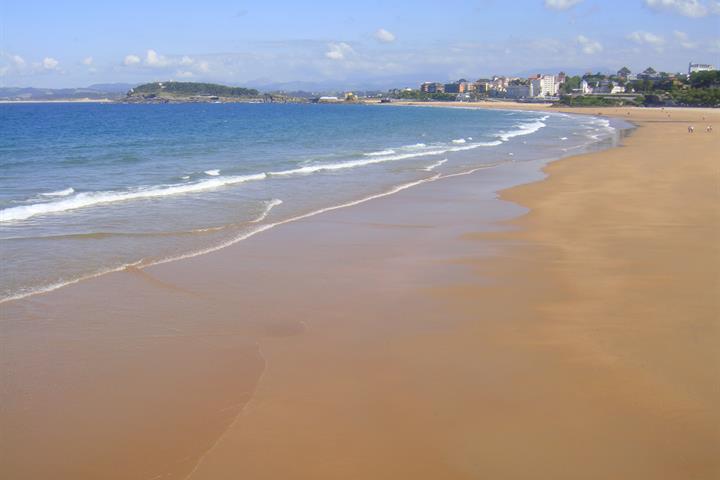
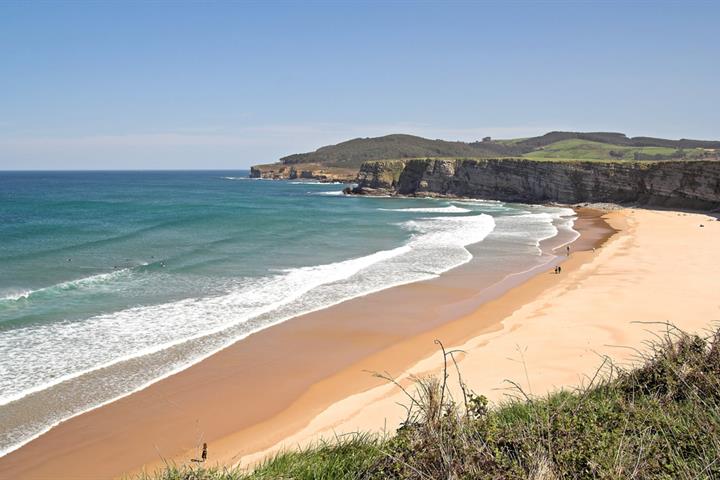
The city centre has many fine historic buildings and fronts several excellent sandy beaches.

Beaches
The main town beaches are Playa los Peligros, Playa de la Magdalena, situated on the Magdalena peninsula; Playa del Camelo, Playa de la Concha, and then the last city beach is the long playa del Sardinero. These city beaches all have excellent facilities, with restaurants and bars nearby. The south facing beaches have very calm waters.

There are few beaches on the northern coastline just above the city, which is very rocky and exposed to the Atlantic. However it is a very beautiful coastline where you can find some lovely isolated little coves.

There is a long sandy spit, Liencres Playa, at the mouth of the river Pas, which has beautiful dunes and is quite remote. On the opposite, more sheltered bank, is the Playa Magro, which has a promenade, and some facilities.

Several small sandy coves can be found between Liencres Playa and the City of Santander, dotting the rocky coast.


Culture, architecture & history
The monumental zone, where most of the museums and official buildings are, begins at Paseo Pereda and finishes opposite the Museum and Library Menéndez Pelayo; this is also the main commercial zone.


Santander is an especially green city with plenty of parkland space. The largest of these green spaces are the beautiful, landscaped Jardines of Pereda (Gardens), which were created as a tribute to the Cantabrian writer, José María de Pereda. They are also home to a number of monuments including the music pavilion and the statue tribute to the garden’s namesake.

The most ancient monument in Santander is the cathedral, which was built on a Roman settlement and incorporates the original church dating back from the 13th Century.

The Italia Square is the nerve centre of this zone, we can see some houses and buildings of the ‘belle epoque’, for example, the Great Casino, inaugurated in 1916.

Eating out
The restaurants make good use of high quality seafood, which is freshly caught in the local region; squid is a particular delicacy.

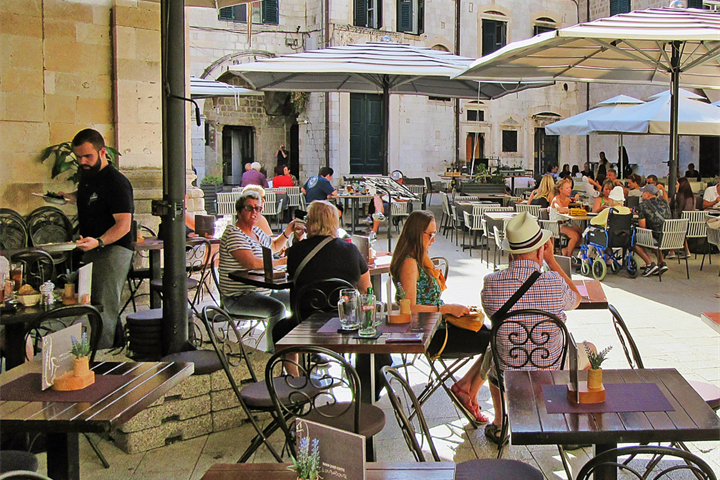
Santander has restaurants to suit all tastes and pockets; in the centre and around the beaches and harbour there are a lot of old-style restaurants and tapas bars. There are more informal restaurants and tapas bars in the street Peña Herbosa where you can have the typical Sunday lunch of “Rabas” (squids coated in breadcrumbs) and “blancos” (white wine). In the Vargasare the traditional “chiquiteo” (wine and beer) are favourites, and in San Amaro “Mejillones picantes” (spicy mussels) and “Cañas” (draught beer) go very well together.

Cuisine
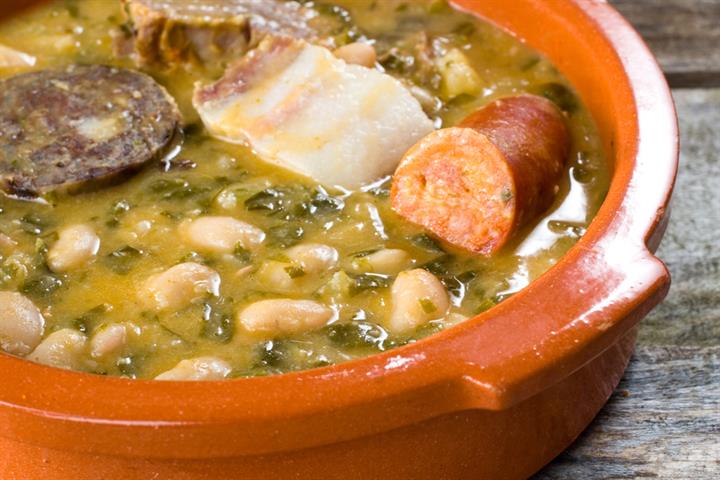
The region's cuisine is based around game and seafood; specialties include "Sorropotún" (a traditional fisherman's stew), the magnificent seafood straight from the waters of the Cantabrian Sea, and the famous "Corbatas en Unquera", a delicious dessert made from puff pastry.

Climate
Most of Cantabria is under the influence of an oceanic or Atlantic climate, whose two main characteristics are to give mild temperatures with limited variations and abundant rainfall throughout the year.

In Santander the average temperature of the coldest month (February) is around 9 degrees Celsius, whilst average temperatures for the warmest month (August) are usually closer to 20 degrees centigrade and annual rainfall totals exceed 1,100 mm.


Slight variations apply to the entire coastal strip, whilst further inland the temperatures are even more contrasting, with colder winters and hotter summers. Moving away from the coast also increases rainfall, except in the area of Liebana, which has a microclimate in the mountains with only 700 mm of annual rainfall.

 In the higher regions the winters are long and have frequent snowfall.

Map of Santander

Reviews for Santander

Average overall ratings
 
City
Coast
Based on 2 reviews.

   
City
Coast
Submitted by:
29 August, 2011
French  This review is in French - Click here to see the review
   
City
Coast
Submitted by:
26 August, 2011
Dutch  This review is in Dutch - Click here to see the review

Reviews are the subjective opinions of travellers and not of Spain-holiday.com