Quick Search

Select area

select

Rental type

select

Bedrooms

select

Short list

My shortlisted
holiday homes

Search vacation home in Spain
Pay via secure encrypted SSL

Andalusia travel information and video

Holiday information, facts, photos and video about Andalusia


This is a video about Andalusia produced by Spain-holiday.com. Watch our Andalusia travel video and be inspired to visit the stunning Andalusia.


Facts

Inhabitants 8000000
Nearest airport Sevilla, Malaga, Gibraltar, Jerez
Max. temperature 47 C
Min. temperature 12 C

Newsletter

Recieve news and special offers

You may unsubscribe the newsletter at anytime


Email 


Andalusia

Andalusia or Andalucía as it is translated in its native Castellano is the southern most region of Spain and the most populated of all seventeen autonomous communities with over 8 million inhabitants.

The name dates back to the Arabic ‘Al-Andalus’, which referred to the regions of Spain that came under Arabic administration, in various periods between 711 and 1492.

The all year round mild climate enjoyed in Andalusia makes it one of the most popular destinations in Spain for travellers and holidaymakers who come to enjoy both summer and winter sun vacations. The famous Mediterranean resort of Marbella is a destination enjoyed by tourists from all over the world.

Nevertheless Andalusia has a whole lot more to offer and the different provinces are very distinct in their character, flavour and landscape.

The region is divided into eight separate provinces: Seville, Cádiz, Huelva, Málaga, Jaén, Granada and Almería.

Seville
Seville is the capital and largest city in Andalusia, it lies on the banks of the Gaudalquivir River and is one of the most historical centres of Europe, its undeniably the main attraction of the province itself and is brimming with historical and cultural citations.

The city is the home of tapas, flamenco and the keeper of the Archive of the Indies (the extremely valuable historical records documenting the history of the Spanish empire). Seville is a must for travellers who want to completely immerse themselves in Andalucian culture and history. Sevillanos (natives of Seville) also know how to enjoy themselves to the max; so combine history, culture and frivolity in one and you have Seville.

Relatively few tourists venture beyond the capital, but its absolutely worth it if you have the time. Much of the province is cut through by the River Gaudalquivir, which sets a striking scene. In fact many of the provinces villages and towns are positioned along the river. The beautiful countryside of the Sierra Morena and Sierra Norte Natural Park are fabulous locations for those who love walking, cycling and trekking holidays. Mountain villages and towns dating back to the Copper ages, quaint inns and taverns, ancient castles and pure Andalucian culture, all make for a truly rural vacation.

Malaga
Moving on to the province of Malaga and its famous stretch of holiday resort towns of the Costa del Sol (Sun Coast) that it shares with Cadiz, are visited by millions of tourists every year. Bordering the Mediterranean Sea, with a backdrop of mountains, the coastline has an extremely agreeable climate with warm, long summers and short mild winters with average temperatures in the winter of 17.2ºC (63.0ºF) and 29ºC (83ºF) in the summer.

The province comprises of 100 municipalities stretching from the Eastern towns and sierras of the Axarquía, inland to Antequera and the Serranía de Ronda and down to Estepona at the most western point, before entering into the province of Cadiz.

Malaga city itself has a population of over half a million and has a rich history spanning back 2700 years to the Phoenicians in 770 BC and is the birthplace of Pablo Picasso and Antonio Banderas. Recently the city has been nominated as a candidate for the 2016 European Capital of Culture.

The coastal towns of Torremolinos, Benalmádena, Fuengirola and Marbella which were once just small fishing towns with very little to offer, now count as amongst the most important touristic destinations in Europe and are also home to a high population of foreign residents who have swapped their Northern climes for southern sun.

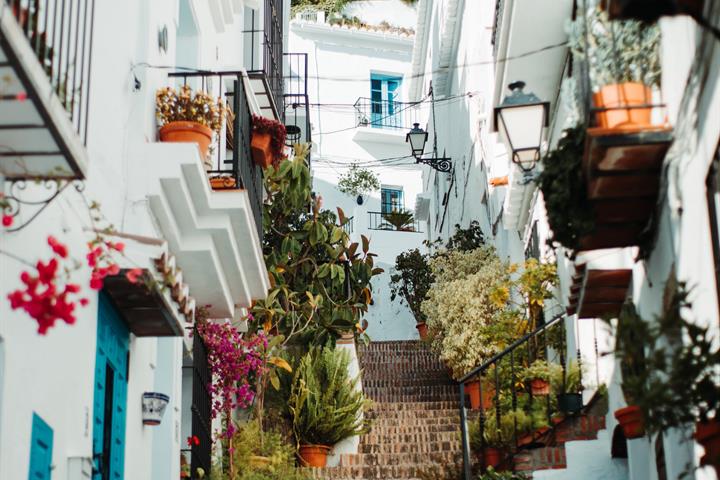
Inland Malaga paints a completely different picture; white washed rural villages, kilometre upon kilometre of olive and orange groves, rolling countryside and ancient settlement ruins dating back to Roman and Neolithic ages.

In terms of gastronomy, Malaga is noted for the great variety of fish and fish dishes offered. The famous ‘pescadito frito’ (fried mixed fish) and ‘Sardinas el Espeto’ (Sardines on the Spit) are two favourites.

Almeria
Furthest east, we come to the province of Almeria, again the name derives from the Arabic occupation, originally Al-Mariyya, meaning The Mirror, as it was compared to The Mirror of the Sea. The capital city of the same name, Almería was an Arabic stronghold and the principal harbour in its domain. The Moorish castle of Alcazaba, is the second largest of the Arabic fortresses in Andalusia, after the Alhambra in Granada.

The province of Almeria has supposedly the most hours of sunshine and lowest rainfall in Europe, much of the province has a desert landscape and is sparsely populated. The distinct wild environment was the location for many of the Spaghetti Western movies. The dry and arid landscapes of the Taberna desert area were perfect set locations for the films of Sergio Leone. David Lean also shot some scenes there in the Oscar winning film Lawrence of Arabia.

The province also boasts some beautiful natural coastal landscape, including the volcanic park of Cabo de Gata-Níjar Natural Park. The coastline is one of the most beautiful, natural and ecologically rich coasts along the western Mediterranean.

Almerians of note include renowned Flamenco guitarist José Tomás ‘Tomatito’ and Grammy Award winning singer David Bisbal.

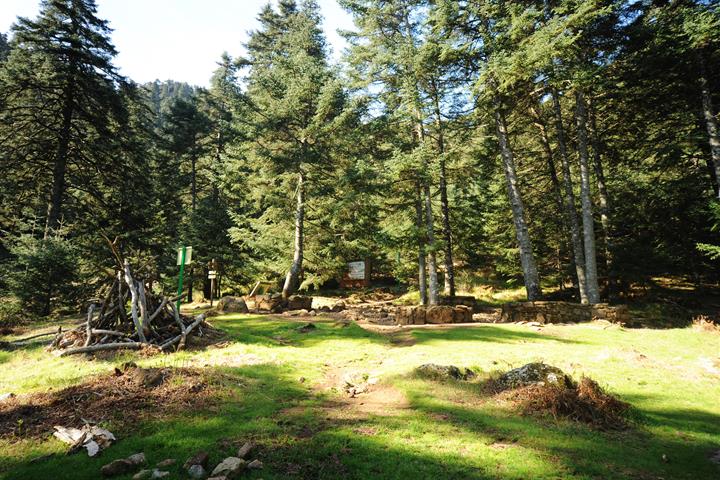
Above Almeria is the inland province of Jaen, as with all of the Andalusian provinces, its name derives from the Arabic, Jayyan, and means ‘crossroads of caravans’. The province contains the largest protected land area in Spain; the rugged Cazorla Natural Park, the Sierra de Andújar Natural Park, a wooded wonderland, and the Despeñaperros Natural Park, which is one of the last remaining habitats for the endangered Pardel Lynx species.

Jaen
Jaen is the world’s leading producer of olive oil and much of the unspoilt landscape is a vista of olive groves, white washed farms and ancient castles and churches.

Granada
Moving west, between Almeria and Malaga, you will find the diverse province of Granada. Such is the history and beauty of the province and city of the same name, that it attracts visitors from all over the globe.

The city is located at the foot of the Sierra Nevada mountain range and its slightly cooler climate reflects this. However, moving across the Genil plains, down towards the coastal area of the Granada Province, the Costa Tropical (Tropical Coast), the climate becomes warmer and more in line with the rest of southern Spain’s climate.

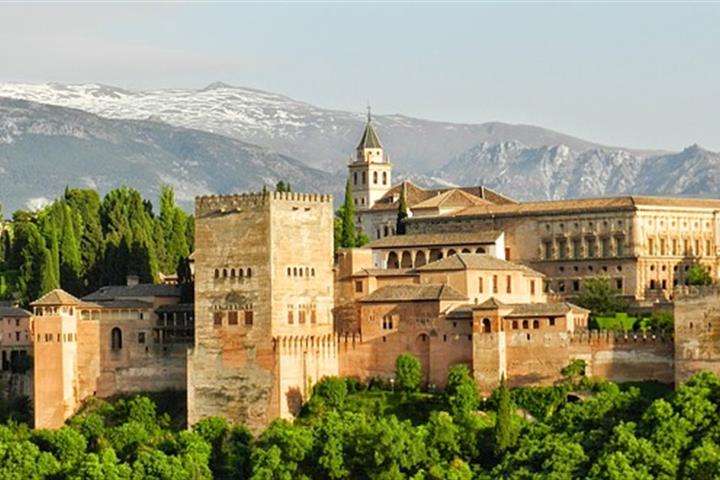
The city itself is perhaps most famous for being home to the Moorish citadel and palace, The Alhambra. Both the 14th Century Alhambra and The Generalife summer palace are UNESCO registered Heritage Sites.

The Albacín quarter, a hilly district of cobbled streets, alleyways and white washed villas, is a fascinating place to visit, once the old Moorish Kasbah, the view to the Alhambra from here is wonderful.

The Sierra Nevada mountain range, which shadows the city of Granada, is Europe’s most southerly skiing resort. The range is set within the beautiful Sierra Nevada National Park, which has been named a biosphere reserve and is not just a great winter ski resort, in the summer it provides a beautifully natural setting for trekking and walking holidays.

At the southern point of the mountain range is the district known as Las Alpujarras. The whole area is considered a mini ecosystem. Deep valleys and gorges that snake their way down to the Mediterranean, the area is one of the most fertile in Spain, with terraced farmlands, which maintain their watering system by the constantly melting snow from the Sierra Nevada mountains.

Cadiz
Now we take a leap past Malaga to the point of Spain that nearly touches nose to nose with Africa, the province of Cadiz. Stretching from San Roque, passing the British territory of Gibraltar, and finishing at Cadiz city. Here the Mediterranean Sea ends and the Atlantic Ocean starts. It’s capital city, Cadiz, is the oldest inhabited city in the Iberian Peninsula and possibly in all of south-western Europe. The city juts out on a peninsula and is completely surrounded by sea; you can catch a boat across a stretch of water to the beautiful village of Puerta Santa María.

The old city has a very Moorish feel, however, there is also a Cuban influence in Cadiz, as Cadiz and Huelva is where the Spanish armadas left to conquer the Indies. It’s a very easygoing city; the Cadiz Carnival in February is famous throughout Spain and the city is very popular with language students who come to learn Spanish and soak up the local culture.

However, the largest city in the province is in fact not its capital, but the city of Jerez de la Frontera, the home of Sherry; also famous for horse and cattle breeding and flamenco. The city dates back to Moorish times, as does so much of Andalusia, but aside from this, Jerez has a very dignified presence, families with a long line of ancestry give Jerez an aristocratic air.

The hip and trendy town of Tarifa is also found in Cádiz. The town and surrounding beaches are very popular with wind and kite surfers due to the strong winds from the straits, because of the high winds in the area; the landscape is dotted with Wind Turbines, creating natural energy in the region.

Huelva
Our final destination in Andalusia is the province of Huelva, which sits between Cadiz and Seville, and borders both Extremadura and Portugal. Huelva’s best export is the Doñana National Park, one of Europe’s most important wetlands and a biosphere reserve.

It’s one of the least visited provinces of Andalusia, but that doesn’t make it the least attractive, the region boasts miles of beautiful unspoilt beaches of golden sand, known as the Costa de la Luz (Coast of Light) and is rich in wildlife and natural scenery.

The maritime city of Huelva is located on the Gulf of Cadiz coast; it’s smaller in comparison to its counterparts, with a population of around 150,000. It’s been inhabited since 3000 BC and boasts the oldest football club in Spain, not dating back quite so far!

Map of Andalusia

Exciting places to visit in Andalusia

Travel information about popular villages and towns in Andalusia

Towns and areas


Reviews for Andalusia

Average overall ratings
 
City
Coast
Based on 624 reviews.

   
City
Coast
Submitted by:
23 February, 2012

City review

A wonderful little town, with great local restaurants and markets, make sure you visit the bakery and if the right time of year a local football game.

Coast review

A pretty coast with lots to see and do within a 2 hour drive.
Was this review helpful to you? Yes  No
   
City
Coast
Submitted by:
21 February, 2012

City review

Beautiful and interesting town with many possibilities.

Coast review

The best part of Spain.
Was this review helpful to you? Yes  No
   
City
Coast
Submitted by:
17 February, 2012

City review

Great for our first time in this part of the coast. English is spoken by so many people, making conversation less stressful.

Coast review

Plenty to see so we will be back sometime in the future
Was this review helpful to you? Yes  No
   
City
Coast
Submitted by:
16 February, 2012

City review

Not very much to do. Take away the bars and restaurants and what's left? Paloma park?

Coast review

Clean
Was this review helpful to you? Yes  No
   
City
Coast
Submitted by:
15 February, 2012

City review

Malaga's worth a trip to visit the cathedral and Picasso museum

Coast review

Vibrant coast, sandy beaches and plenty of bars and restaurants
Was this review helpful to you? Yes  No
   
City
Coast
Submitted by:
13 February, 2012

City review

Beautiful city, old historic parts.

Coast review

Not crowded, clean, sandy. A bit cold water, though
Was this review helpful to you? Yes  No
   
City
Coast
Submitted by:
13 February, 2012

City review

It is an area where English is spoken by staff in shops and restaurants. There is plenty todo and no need to hire a car

Coast review

There was so much to do that we will need to come back again to really appreciate the whole area
Was this review helpful to you? Yes  No
   
City
Coast
Submitted by:
13 February, 2012

City review

It was a little bit to cold

Coast review

No village close to our appartment. Had to take the car
Was this review helpful to you? Yes  No
   
City
Coast
Submitted by:
13 February, 2012

City review

Good for beach lovers. Plenty places to go out. Exelent place for visiting Anadaluzia

Coast review

Too much tourist resorts. Exelent place for visiting Anadaluzia
Was this review helpful to you? Yes  No
   
City
Coast
Submitted by:
12 February, 2012

City review

Nice please , find a very good bakery and restaurants ...

Coast review

we have not interested in the coast ...real relaxing in the garden , and 3 days Rock'n'Roll in torremolinos " Rock'n'Roll racing Jamboree festival !
Was this review helpful to you? Yes  No
   
City
Coast
Submitted by:
10 February, 2012

City review

Nerja is a good mixture of ex-pats (very obvious in town) and real Spaniards - not just caterers to tourists. Choose Nerja as a base (trips to more quite places) rather than as a destination in inself. But the town is very pleasant.

Coast review

Compared with elsewhere (to the West!) Nerja is highly suitable for the non - beach/sun/bar crowd. Small coves with easy access.
Was this review helpful to you? Yes  No
   
City
Coast
Submitted by:
10 February, 2012

City review

Riviera has all the facilities you need to enjoy a relaxing holiday.

Coast review

There is so much to do so great if you want to return to the same area over a period of a few years.
Was this review helpful to you? Yes  No
   
City
Coast
Submitted by:
03 February, 2012

City review

Excellent

Coast review

Beautiful
Was this review helpful to you? Yes  No
   
City
Coast
Submitted by:
01 February, 2012

City review

Competa is a stunning white andalucian village. The locals couldn't be any more welcoming and friendly. A beautiful part of Spain where you can live the traditional spanish lifestyle yet be close enough to the busy coast to visit for the day.

Coast review

Nerja is a lovely coastal town. Nice beaches. Not built up. The caves are definitely worth visiting.
Was this review helpful to you? Yes  No
   
City
Coast
Submitted by:
31 January, 2012

City review

Coin is nice and convenient to everything. Good roads connect it to Marbella, Malaga, and the rest of Costa del Sol. Several supermarkets and a new shopping center add to the convenience.

Coast review

A bit overdeveloped for our taste, but worth a trip. We liked it better than Costa Blanca.
Was this review helpful to you? Yes  No
   
City
Coast
Submitted by:
31 January, 2012

City review

An attractive town with a wide variety of attractions within easy walking reach. Plenty of bars, restaurants and shops at reasonable prices. Good public transport within the town and good rail and bus links to other places at low prices.

Coast review

Visited the beach at Sanlucar using public transport from Jerez. Long, sandy and clean. A number of fish restaurants but rather pricey.
1 of 1 people found this review helpful.
Was this review helpful to you? Yes  No
   
City
Coast
Submitted by:
27 January, 2012

City review

Absolutely loved it - would love to live there.

Coast review

Didn't visit the coast
Was this review helpful to you? Yes  No
   
City
Coast
Submitted by:
25 January, 2012

City review

Gorgeous!

Coast review

Best beach at El Morche.
Was this review helpful to you? Yes  No
   
City
Coast
Submitted by:
25 January, 2012

City review

The town was nice, clean and friendly. Most of the restaurants were a bit so and so in terms of quality, but then again they were quite cheap. Once we found the better ones, with dishes in the 20 euro range, we never looked back!

Coast review

Lovely beach, but too cold in January, of course.
Was this review helpful to you? Yes  No
   
City
Coast
Submitted by:
24 January, 2012

City review

Quiet and very beautiful city

Coast review

We visited the Costa, Marbella, Puerto Banus, Casares. We like everything LOT
1 of 1 people found this review helpful.
Was this review helpful to you? Yes  No

Reviews are the subjective opinions of travellers and not of Spain-holiday.com